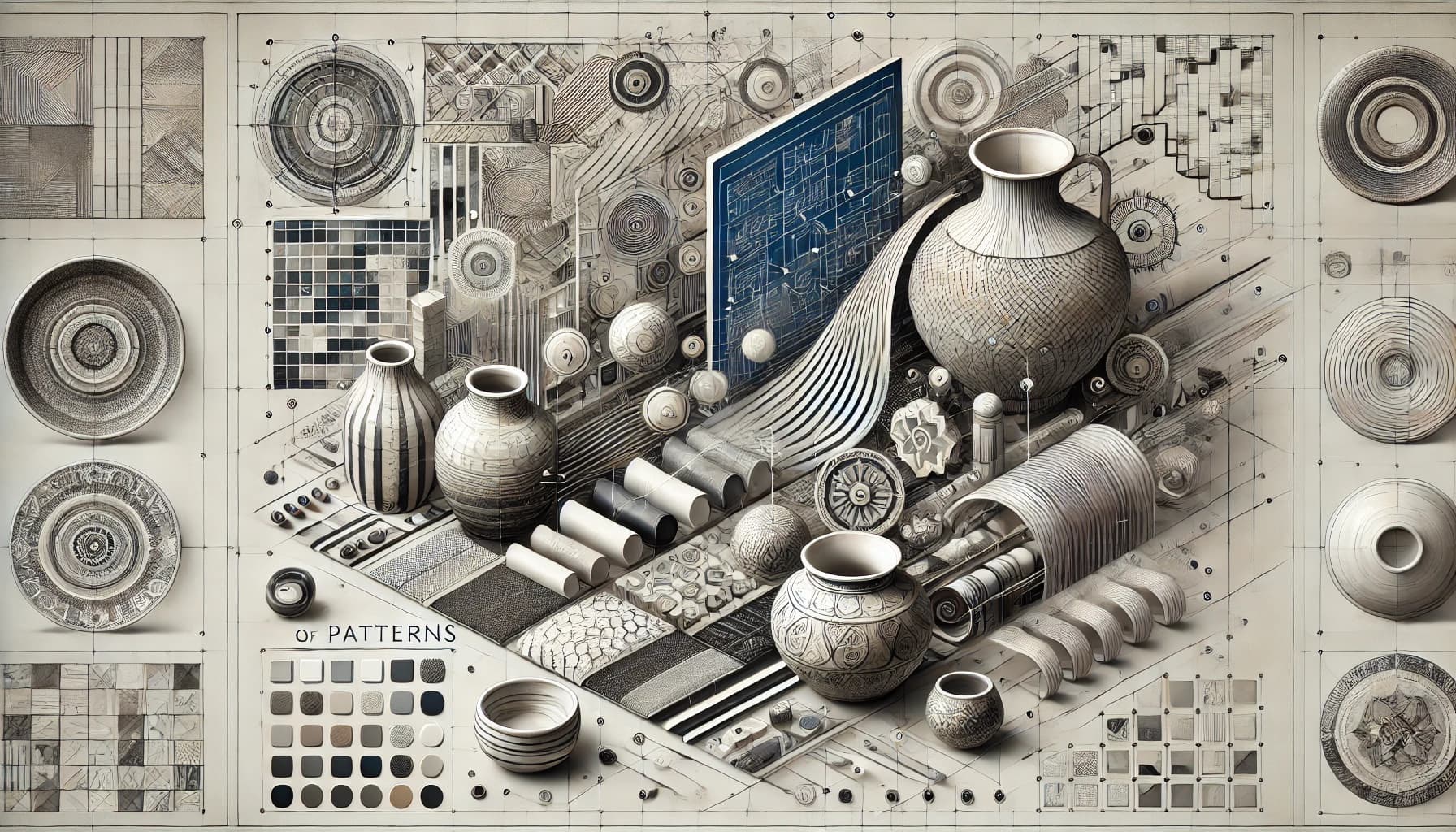
Patterns surround us in every aspect of our lives, serving as a universal language that bridges the gap between human intuition and design. When we encounter a familiar pattern, our response is almost instinctive – we know how to interact. A button invites a click, a coffee cup suggests how to drink from it, and a front door naturally guides us through its threshold.
Master designers harness these patterns to make the novel feel familiar and the complex feel simple. They create experiences so intuitively that they require no instruction manual and no learning curve. The best designers possess an almost sixth sense of pattern recognition, constantly observing and cataloging what works around them. This heightened awareness of patterns becomes less of a conscious practice and more of an instinctive way of seeing the world.
This intuitive understanding is put to the scientific test in UX research. Researchers meticulously study how users interact with different patterns, tracking eye movements and analyzing decision-making processes. Sometimes, what appears as user error reveals a mismatch between designer assumptions and user intuition. These insights lead to designs that align with natural human behavior rather than fighting against it.
Patterns also serve as powerful tools for establishing visual hierarchy and priority. In digital design, we manipulate visual weight to guide users’ attention – buttons being the most obvious example. When multiple actions compete for attention, we create subtle variations in dominance to first lead users toward the most common or important actions. These patterns are then documented in style guides, ensuring consistency across the user experience.
My fascination with patterns spans three distinct mediums: digital products, architecture, and pottery. My journey began with pottery, culminating in a BFA in Ceramics, followed by studies in architecture – a field that continues to captivate me outside my professional life. I’ve worked in digital product development for nearly thirty years, wearing many hats in the industry. Despite the apparent differences between these disciplines, patterns emerge as the common thread that weaves through everything I create.
Christopher Alexander’s seminal work, “A Pattern Language,” approaches this concept from an architectural perspective, but its principles transcend medium-specific boundaries. The book reveals how patterns serve as a fundamental design language that can be adapted and applied across any creative discipline. Whether shaping clay, designing buildings, or crafting digital experiences, patterns remain the essential building blocks of intuitive and effective design.
This universal nature of patterns demonstrates that great design principles are rarely confined to a single medium. Instead, they reflect deeper truths about how humans interact with and understand the world around them. By recognizing and applying these patterns thoughtfully, designers across all disciplines can create work that feels both innovative and inherently familiar – that speaks to our fundamental human nature.
Image generated with the help of AI (ChatGPT & DALL·E).