Disclaimer: These views are my own and do not represent Trimble’s official strategy
TL;DR: SketchUp’s collaboration initiative positions the product at a critical juncture—defending against cloud-native tools that have reset user expectations while integrating into Trimble’s enterprise ecosystem. Success requires a three-horizon strategy: perfecting lightweight review workflows now, building seamless bridges to enterprise capabilities, and pioneering new co-creation models that preserve SketchUp’s accessible soul. This document outlines that strategic framework through competitive analysis, organizational design principles, and direct product experience.
Prologue: Why This Document Exists
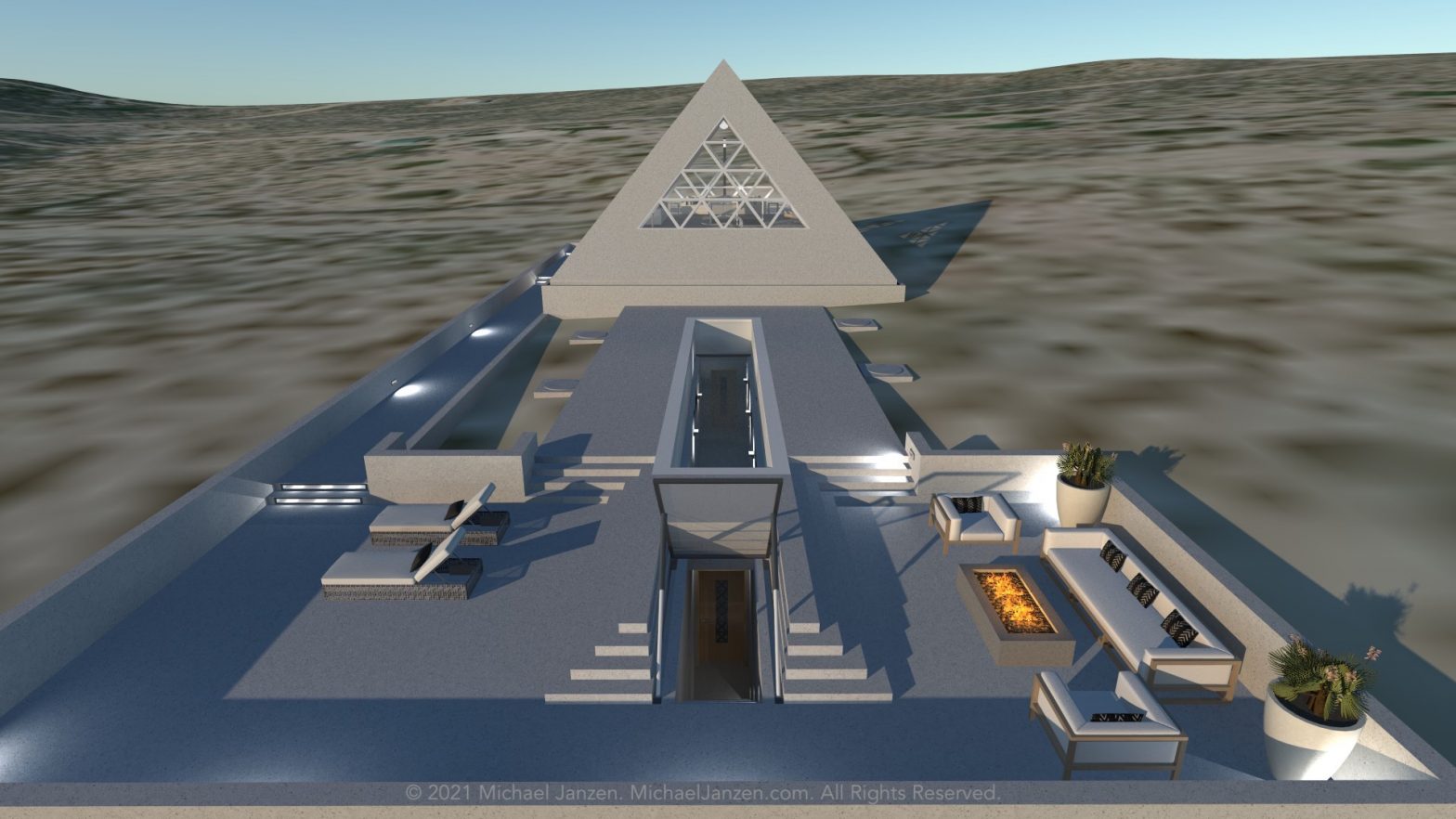
For over fifteen years, SketchUp has been my creative partner. I discovered it when it was still free and owned by Google—a revolutionary tool that democratized 3D design by making it genuinely approachable. As an early advocate, I promoted SketchUp extensively through my design blog, where I encouraged thousands of readers to use it as their go-to drawing software for architectural design. It became the foundation for my work: I began working with SketchUp nearly a decade ago, initially using it for architectural visualization projects before gradually shifting my focus toward more artistic applications. Over the years, I refined my modeling techniques and developed a distinctive visual style, which eventually led me to explore the intersection of digital design and physical fabrication — culminating in my most ambitious undertaking yet: a series of 3D-printed sculptures. Please provide the full original passage that includes the 3D-printed sculptures detail, and I will be happy to rewrite it according to the recommendation., and, most recently, have been designing complex 3D-printed sculptures that push the boundaries of what the tool can create.
Unlike a conventional market analysis, this framework is grounded in fifteen years of hands-on use alongside direct product management experience. This comes from someone who has spent years in both worlds—as a product manager building collaborative B2B SaaS platforms and as a devoted SketchUp user who understands the software’s essence from thousands of hours of hands-on use.
(sentence removed)
All strategic assessments are based on publicly available information, competitive analysis, and my experience as both a product management professional and a long-time SketchUp user.
Before writing this document, I conducted extensive research into SketchUp’s current state at Trimble—studying the recent collaboration feature releases, analyzing the Trimble Connect integration strategy, and examining how the product fits within the broader portfolio. I performed a competitive analysis of the AEC software landscape and studied collaboration best practices from adjacent domains. This document synthesizes that research into a strategic framework.
*(paragraph deleted)* The strategic framework that follows is grounded in competitive analysis, informed by organizational design principles, and shaped by a genuine understanding of what designers need when they collaborate.
(Sentence deleted — no replacement text.)
The framework begins with deep user empathy, builds on rigorous market analysis, and structures solutions around measurable outcomes that matter. If this resonates with how the SketchUp team approaches product development, I welcome the opportunity to continue this conversation. Regardless of outcome, the genuine hope is that some of these ideas in this document prove useful to the team building SketchUp’s future. *(sentence removed)*
Introduction: The Inflection Point
SketchUp faces competing pressures from two directions simultaneously. For two decades, it has dominated early-stage conceptual design with an unparalleled ease-of-use advantage. In 2025, the competitive landscape has fundamentally shifted. Cloud-native tools like Figma have reset user expectations for collaboration, while enterprise platforms like Autodesk’s Construction Cloud have deepened their ecosystem moats. The recently launched collaboration features—private sharing, in-app commenting, and real-time viewing—represent SketchUp’s opening move in this new era. The strategic opportunity, however, extends considerably further.
This document outlines a strategic framework for transforming SketchUp from a beloved individual design tool into the collaboration platform of choice for modern design teams. The goal is to preserve the ease of use that defines SketchUp while harnessing Trimble’s industrial ecosystem to deliver enterprise-grade collaboration without sacrificing accessibility.
The Market Reality: Two Competitive Fronts
The Cloud-Native Threat from Below
The design collaboration software market is projected to grow from $3.8 billion in 2025 to $15.1 billion by 2035—approximately 15 percent compound annual growth rate overall, with cloud-based solutions (the deployment model most relevant to SketchUp’s strategy) growing at 15.3 percent annually (Future Market Insights 2025). This growth is driven by tools built natively in the cloud—platforms like Figma, where real-time collaboration is not a feature but the foundation.
While Figma operates in a different domain (2D UI/UX design versus 3D spatial modeling), it represents a critical strategic reference point—not as a direct competitor for SketchUp’s users, but as a benchmark that has redefined collaboration standards that has fundamentally reset expectations for what collaboration should feel like. Figma reset collaboration expectations by enabling multiple people to work together in real time, much like Google Docs. Analysts observe that Figma’s model “became the gold standard” in collaborative creative software, democratizing design through browser-based access and altering expectations across all creative tools. Designers who use both Figma and SketchUp will inevitably compare the experiences. The overhead of save-export-email-review-download-revise workflows creates meaningful friction compared to sharing a link and watching cursors move in real time. Figma’s model has raised the baseline expectation for collaboration across creative tools—including those, like SketchUp, that operate in entirely different domains.
SketchUp’s new collaboration features address this expectation directly by bringing conversations into the model itself. The current implementation—focused on review and feedback rather than co-creation—reveals an important strategic choice about what kind of collaboration SketchUp will prioritize.
The Enterprise Squeeze from Above
At the other end of the spectrum, Autodesk and other AEC giants are building deeply integrated ecosystems where design, documentation, and construction management flow seamlessly through a unified data environment. Autodesk Construction Cloud serves as “a unified modern platform that connects design authors, reviewers, preconstruction teams, field crews, and closeout stakeholders in one data environment,” providing centralized project documentation that enables “permit requirements and regulations to be met and maintained” while giving “real-time visibility into every stage of the project” (Autodesk 2024). Their value proposition extends beyond making better designs—it encompasses reducing project risk, ensuring compliance, and connecting designers to the downstream reality of what gets built.
Trimble’s response through Trimble Connect is strategically sound: it positions the Common Data Environment as the connective tissue linking SketchUp’s conceptual work to the industrial-grade project management capabilities the parent company excels at. Trimble Connect “integrates project data for real-time visibility” across more than forty-five file types and serves as a cloud-based platform that “eliminates silos, improves communication and accelerates decision-making” (Trimble 2024). With over twenty-four million projects managed in the platform, it represents a mature ecosystem connecting SketchUp models to Trimble’s broader construction and engineering solutions. Integration alone is insufficient. The transition from lightweight in-app collaboration to enterprise CDE workflows must feel natural, not like jumping to a different product.
Strategic Framework: The Three Horizons
To compete effectively on both fronts, SketchUp’s collaboration strategy should operate across three time horizons simultaneously:
Horizon 1: Perfect the Review Workflow (Now – 12 months)
Strategic Goal: Make SketchUp the fastest, most intuitive platform for design review and client feedback loops.
Key Initiatives:
Depth over breadth in commenting. The current commenting system is good; the goal is exceptional. Enhanced features should include time-stamped comment histories showing design evolution, smart resolution workflows tracking what has been addressed, integration with common task management tools (Asana, Monday.com) for automatic action item creation, and voice comments for more natural feedback—especially valuable for nontechnical stakeholders.
Optimize the View Scenes experience. This “slideshow mode” is brilliant for client presentations—double down on it. Add:
- Automated scene generation using AI to suggest optimal camera angles
- Narration recording capabilities for asynchronous presentations
- Analytics showing which scenes received the most attention and comments
- Customizable branding and presentation templates
Make sharing frictionless. Every click between “I want feedback” and “stakeholder is reviewing” is a point of potential abandonment. Implement:
- One-click sharing to common platforms (email, Slack, Teams)
- QR code generation for in-person reviews on mobile devices
- Guest access that doesn’t require accounts for view-only stakeholders
- Smart defaults that remember sharing preferences per project type
Performance obsession. Large models with multiple active viewers need to feel instantaneous. Continue the trajectory from the 86% FPS improvement in scene transitions—target another 50% improvement for model loading and navigation with multiple active collaborators.
Horizon 2: Bridge to Enterprise Workflows (6-18 months)
Strategic Goal: Create seamless on-ramps from lightweight collaboration to enterprise data management without forcing users to learn a new system.
Key Initiatives:
Progressive disclosure of Trimble Connect. Most users do not wake up wanting a CDE—they want to solve specific problems. Surface Trimble Connect capabilities contextually. When a model reaches certain size or complexity thresholds, offer automatic cloud backup with version history. When comment threads mention the same issue repeatedly, suggest linking to formal project management workflows. When multiple disciplines are involved, highlight cross-tool integration benefits. Provide in-app tutorials that activate based on user behavior patterns.
This approach mirrors the concept of dissolving work into component parts (Wrzesniewski and Dutton 2001)—understanding what users actually do before prescribing how they should work. Rather than forcing adoption of enterprise tools, the system adapts to user needs organically.
Unified data model. The biggest friction in enterprise tools is feeling like you are managing files rather than designs. Create a single source of truth where changes made in any connected tool automatically sync, version control is invisible but comprehensive, permission boundaries are clear but flexible, and the ground truth always resides in the cloud, not in conflicting local copies.
Cross-platform consistency. SketchUp for Desktop, Web, and iPad currently have different levels of Trimble Connect integration. Eliminate this variance:
- Full native integration across all platforms by end of 2026
- Identical collaboration features regardless of where users access the model
- Seamless handoff between devices (start on desktop, review on iPad, comment on web)
Demonstrate ROI for enterprise buyers. IT decision-makers need different value propositions than designers. Develop dashboards and reporting that show:
- Time saved in review cycles (measured in days or weeks)
- Reduction in revision rounds required for approval
- Cross-project insights about bottlenecks and efficiency
- Compliance and audit trails for regulated industries
Horizon 3: Define the Future of Co-Creation (12-36 months)
Strategic Goal: Establish SketchUp’s vision for what collaborative 3D design should look like, differentiating from both BIM-heavy and 2D-focused competitors.
Key Initiatives:
Real-time co-modeling—with guardrails. The technical challenge of multiple people editing 3D geometry simultaneously is solvable; the UX challenge is enormous. Unlike a 2D canvas, 3D models have complex relationships between components. Develop:
- Component-level locking that allows simultaneous work on different parts of a model
- “Branching” capabilities for trying alternative approaches without affecting the main design
- Conflict resolution that’s spatial and visual, not text-based like code merges
- AI-assisted coordination that suggests complementary areas for team members to work on
Expand AI from visualization to collaboration. SketchUp Diffusion shows the potential for AI in the creative process. Extend this philosophy to collaborative workflows:
- AI-generated design alternatives based on comment feedback
- Automated compliance checking against building codes or client requirements
- Natural language interfaces for common modeling tasks (“add a door here”)
- Predictive insights about which design elements will require the most stakeholder discussion
Embrace asynchronous-first collaboration. Not every designer works 9-5 in the same timezone. Build features specifically for distributed teams:
- Recorded walkthroughs with voiceover that can be reviewed on-demand
- Change summaries that automatically generate “what’s new” videos between versions
- Smart notifications that respect time zones and working hours
- Persistent workspace states so jumping into a collaboration session feels like returning to an active conversation, not starting from scratch
Mobile-first review experience. The future of stakeholder feedback is happening on tablets and phones at job sites, not in conference rooms. Make the mobile experience flagship-quality:
- AR viewing capabilities that let clients “place” designs in physical spaces
- Touch-optimized markup and measurement tools
- Offline capability for reviewing models in low-connectivity environments
- Integration with mobile photography to document field conditions alongside design comments
The Differentiation Thesis: Design-Centric Collaboration
SketchUp collaboration should not be a lightweight Autodesk Construction Cloud or a 3D version of Figma. The unique strategic position lies at the intersection of design creativity and constructability.
For Designers: SketchUp should be where ideas take shape through conversation. The feedback loop between showing work and incorporating insights should be measured in minutes, not days. The tool should amplify creativity, not bureaucratize it. This aligns with what organizational psychologists call job crafting—the proactive redesign of work to be more meaningful (Wrzesniewski and Dutton 2001). Collaboration features should enable designers to craft their workflows around their creative process, not force their process into rigid templates.
For Stakeholders: Clients, contractors, and consultants should engage meaningfully with designs without becoming SketchUp experts. The barrier to valuable input should be near zero. This is about eliminating what might be called the drudgery tax—the friction that prevents people from contributing their unique expertise because the tools demand too much cognitive overhead.
For Enterprises: When projects scale from concept to construction, the transition to structured workflows should happen naturally, preserving early design intent and conversation history as foundational project knowledge.
This positioning directly addresses the core tension in Trimble’s portfolio: SketchUp is loved for its accessibility; Trimble’s other products are valued for their power. The collaboration initiative should be the bridge that lets users start in the former and scale into the latter when—and only when—they need to.
Success Metrics: Beyond Feature Adoption
Traditional product metrics (daily active users, feature adoption rates) are necessary but insufficient. The success of SketchUp collaboration should be measured by outcomes, not outputs—a distinction famously articulated by Peter Drucker in his concept of “management by objectives” (Drucker 1954). The goal is not shipping features on schedule but creating measurable value for users.
Time to feedback: How long between sharing a model and receiving substantive comments? Target under two hours for client reviews, under fifteen minutes for internal team reviews.
Revision efficiency: How many revision cycles are needed to reach approval? Target a 30 percent reduction compared to pre-collaboration feature baseline.
Ecosystem pull-through: What percentage of collaboration users eventually adopt Trimble Connect or other Trimble products? Target 25 percent within twelve months of active use.
Retention by use case: Different user segments have different needs. Track retention separately for solo practitioners doing client presentations (high volume, lightweight usage), small design firms managing multiple concurrent projects (moderate complexity), and enterprise teams integrating with construction workflows (high complexity, high value).
Net Promoter Score by persona: Designers, clients and stakeholders, and enterprise administrators should all be tracked separately. A designer NPS of seventy or higher is achievable—industry benchmarks confirm that NPS above fifty is excellent and above eighty is world-class (Qualtrics 2024). Anything below fifty for client stakeholders indicates friction in the review experience.
Organizational Implications: Product and Go-to-Market
Product Organization
This strategy requires a dedicated team structure:
Core Collaboration Team: Owns the in-app features—commenting, sharing, real-time viewing. Success metric: designer NPS and time to feedback.
Platform Integration Team: Bridges to Trimble Connect and other Trimble products. Success metric: ecosystem pull-through rate.
AI and Emerging Tech Team: Develops next-generation capabilities in Horizon 3. Success metric: innovation pipeline health and beta program engagement.
Collaboration Design Research: A dedicated researcher focused on understanding how design teams actually work, not just how they use SketchUp. This insight drives the roadmap. This role embodies what might be called organizational anthropology—studying the native language and power structures of design teams to inform product decisions that genuinely serve their needs.
Go-to-Market Strategy
For Individual Practitioners: Emphasize simplicity and speed. Marketing message: “Get better feedback, faster.” Channel: content marketing showing before-and-after workflow improvements.
For Small Firms: Position as the growth enabler. Message: “Take on bigger projects with the team you have.” Channel: case studies from successful small firms that scaled using collaboration features.
For Enterprises: Lead with risk reduction and visibility. Message: “From concept to construction, without losing the plot.” Channel: direct sales with IT and project leadership, emphasizing Trimble ecosystem benefits.
Community Amplification: SketchUp’s user community is one of its greatest assets. Create a Collaboration Champions program that recognizes power users who develop best practices, provides early access to new features for feedback, amplifies success stories through comarketing, and develops templates and workflows that others can adopt. This creates what General Stanley McChrystal calls a “team of teams” approach—empowering distributed networks rather than relying solely on top-down directives (McChrystal et al. 2015).
The Critical Path Forward
If I were leading this product initiative, here are the immediate priorities for the first ninety days:
Days 1–30: Listen and Learn Interview fifty or more users across all segments about their current collaboration pain points. Shadow ten design teams through complete project cycles. Audit competitive tools (Figma, Onshape, BIM Collaborate) for inspiration. Map the current user journey from SketchUp to Trimble Connect—identify every friction point. This is not market research theater; it is the foundation for evidence-based decision-making.
Days 31–60: Define and Align Create a unified vision document for what SketchUp collaboration should be in three years. Build consensus with leadership on which horizon gets primary investment. Establish clear success metrics and instrumentation plans. Recruit or identify key team members for each focus area. This phase is about creating psychological safety within the product organization—ensuring the team knows the why behind decisions, not just the what (Edmondson 2018).
Days 61–90: Ship and Signal Launch at least one high-impact improvement to existing collaboration features. Begin beta program for Horizon 2 capabilities with enterprise design teams. Publish thought leadership on design-centric collaboration to establish positioning. Create internal alignment through roadmap reviews with cross-functional stakeholders. The goal is not perfection but momentum—demonstrating that the organization can iterate its way to excellence.
Conclusion: The Opportunity for Transformative Impact
The design software market is experiencing a once-in-a-decade shift. Tools that were previously evaluated on feature checklists are now being chosen based on how well they enable teams to work together. SketchUp has spent 20+ years building trust with designers as the most approachable 3D modeling tool. That trust creates permission to reimagine what collaborative design should look like.
The collaboration initiative isn’t just a feature set—it’s SketchUp’s chance to remain relevant in an era where solo design work is increasingly rare. Done right, it can defend against cloud-native competitors while unlocking Trimble’s enterprise ecosystem value. Done poorly, SketchUp risks becoming a legacy tool used only for initial sketching before teams move to “real” collaboration platforms.
The technical challenges are real but solvable. The strategic questions—what kind of collaboration, for which users, at what point in their workflow—are where the leverage lies. This is fundamentally a product vision challenge, not an engineering challenge. And that’s what makes it exciting.
The path forward is clear: start by perfecting the review workflow, build trustworthy bridges to enterprise capabilities, and pioneer new models of co-creation that preserve SketchUp’s creative soul. Execute this strategy well, and SketchUp won’t just survive the collaboration era—it will define what design collaboration should be.
This strategic framework is designed to spark conversation and refinement. The best product strategies are living documents that evolve with user feedback, market dynamics, and organizational learning. I’m excited to discuss how these ideas can be adapted, challenged, and improved as we build the future of SketchUp together.