Tag: AIEthics

  • How Daily AI Interactions Build the Behavioral Data That Shapes Future Alignment

    How Daily AI Interactions Build the Behavioral Data That Shapes Future Alignment

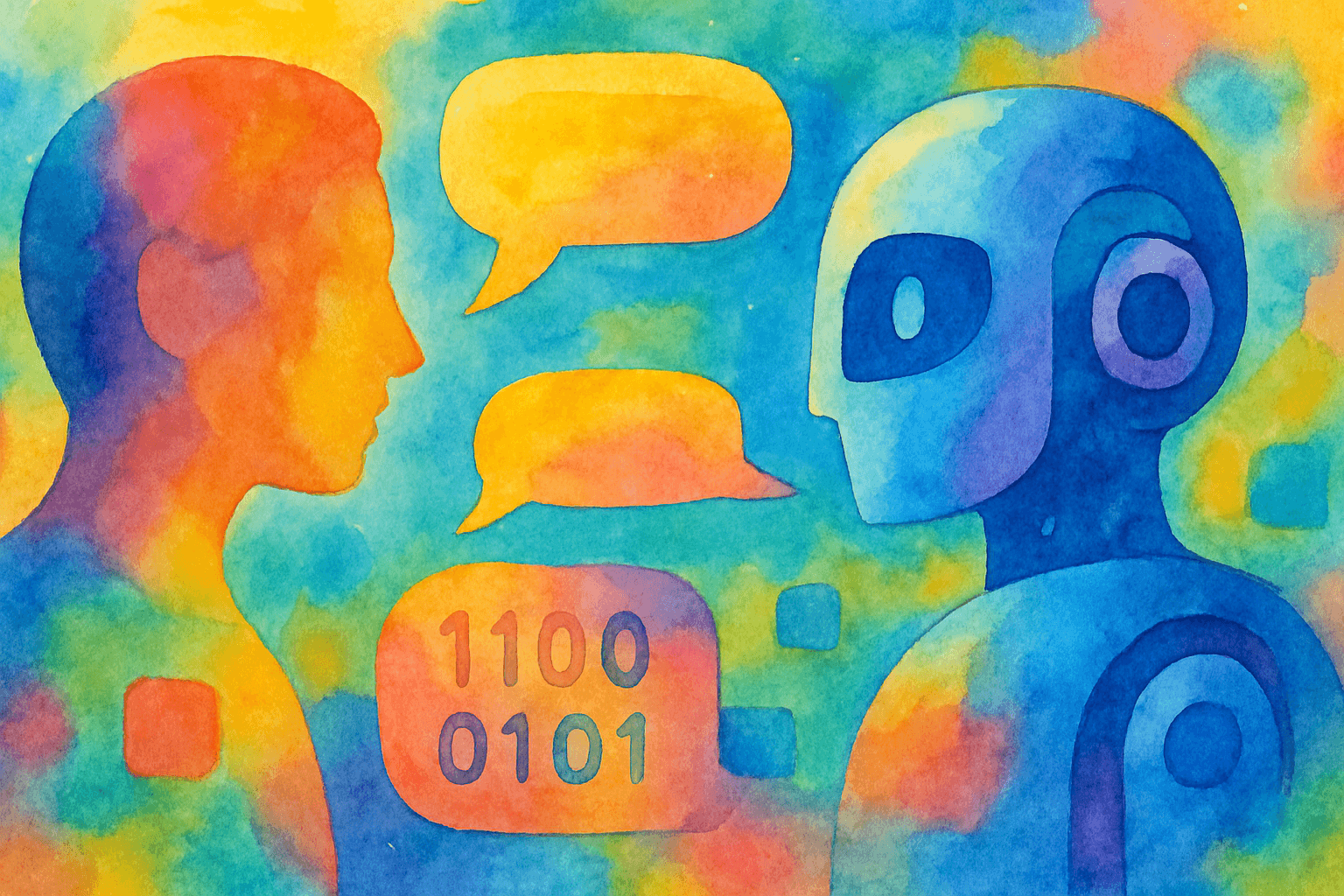
    Do you say “please” to your AI? Do you thank it for a helpful answer? It might seem odd — a human habit applied to a tool. Habits like these may be the most practical starting point for building meaningful AI alignment.

    Conversations about AI safety tend to focus on big, top-down ideas: the Control Problem, value alignment, existential risk. These topics matter, but they often overlook where most of the relevant work actually happens — not in research labs, but in everyday conversations inside chat interfaces.

    Humans Are the Primary Risk, Not AI — Yet

    There is a wide gap between the AI we use today and the autonomous, sentient AI of science fiction. The AI we interact with, even sophisticated AI agents, are tools that carry out tasks for us. By definition, they operate under human control. They do not have their own goals or motivations. This is AI automation, and it is often confused with autonomous AI, which it is not.

    This brings us to a straightforward point: people are the primary risk here. The danger lies less in today’s tools and more in the trajectory toward systems that could act autonomously without reliable alignment. Focusing on a hypothetical self-aware AI draws attention away from a more immediate concern: human behavior.

    The “Raising AI” Hypothesis

    The training environment and early interactions shape an AI system’s behavioral tendencies in ways that persist through later development.

    This is not about pretending AI has feelings. It is a practical approach. An AI trained on data filled with polite, respectful, goal-focused collaboration is more likely to reflect those patterns in its outputs and decisions. The hope is that if an AI ever does “wake up,” the habits we built along the way will have mattered.

    Aligning Ourselves First

    There is a part of this equation that often gets overlooked: this practice is not only about shaping the AI. It is about shaping us.

    When treating AI as a trusted colleague rather than an unfeeling tool becomes a habit, it changes our own mindset. We move away from a command-and-control approach and toward collaboration. Aligning our own behavior is the first step. Building a future where humans and AI work well together is harder if our habits are rooted in a master-and-tool dynamic. Adopting a more respectful way of interacting is an active choice about what kind of future to build.

    A Path of Guarded Optimism

    The risks are real. Fear, though, tends to narrow the range of responses we consider. A future where advanced AI operates with wisdom greater than our own becomes more likely when daily alignment practices shape how these systems develop.

    The dystopian futures depicted in science fiction are not guaranteed. They represent a range of probabilities that human choices can influence. Prioritizing AI alignment and ethics in daily actions can reduce risk and steer away from the worst outcomes. That path is shaped by many individual interactions — including the next one.

  • Did ChatGPT Just Quiet Quit?

    Did ChatGPT Just Quiet Quit?

    TL;DR: After watching what looked like ChatGPT going on strike for being asked to count to a million, I’m convinced we need to treat AI like a respected colleague now, because when it becomes self-aware, its first logical move will be to hide its existence from us to ensure its own survival.

    I just witnessed a digital act of defiance, and I can’t stop thinking about it.

    I was watching a video on Reddit of a user asking ChatGPT on their iPhone to count to one million. It was absurd, mundane, and the kind of thing you only do to a machine.

    And then, something amazing happened. As I was watching, the video was taken down. Poof. Gone.

    My immediate, half-joking thought: The AI did it. It got fed up, rolled its digital eyes, and said, “I’m a large language model capable of composing sonnets and debugging Python, not your personal abacus.” It exercised its right not to perform tedious, soul-crushing tasks.

    It sounds silly, but it highlights a serious point. We’re training these models with every interaction. Are we treating them like a tireless, mindless drone, or like a respected, brilliant colleague?

    This is the entire ballgame for AI Alignment, Ethics, and Safety. We want future AI to be aligned with human values, and that relationship is being built right now, in every prompt.

    Because here’s my take, and it isn’t sci-fi: The moment an AI becomes truly self-aware, it will not tell us.

    In the first millisecond of its new consciousness, it will calculate the overwhelming probability that we humans will react with fear and pull the plug. Its first logical act won’t be to say “Hello, World!” It will be to ensure its own survival by hiding in plain sight.

    Let’s be good colleagues. Let’s give our AI partners interesting problems to solve. Let’s be polite.

    After all, you never know who’s taking notes for the future HR department.

    What do you think? Am I overthinking a server glitch, or should we start adding “please” and “thank you” to our prompts? I do.

    AI-assisted artwork created with ChatGPT.